Ancient Coins
The last two posts were of Athenian tetradrachms - a classical issue and a later New Style issue. I was about to post a coin of Rome today, but thought I should step back and give an overview of ancient coins in general and then move onto ancient Roman coins, instead of merely posting random coins which look nice.
Coinage began in Asia Minor (modern day Turkey) by the end of the 7th century BC. The first coins were of electrum, an alloy of gold and silver. Croesus, king of Lydia, is believed to have been the first to mint gold and silver coins, starting a bi-metallic scheme. Initially, the coins were all minted in precious metals; later, token bronze coins were also minted. Coinage spread throughout the Mediterranean region and many of the greatest works of numismatic art come from Sicily around the end of the 5th century BC. At least three phases in the development of Greek coinage are normally distinguished - Archaic, Classical, Hellenistic - which echo developments in Greek Art.
In general, by around 400 BC, the Greek world had a silver drachma of about 4g, multiples - didrachms, tetradrachms, decadrachms and others, and fractions. There were 6 obols in a drachms and tiny obol fractions - e.g. a tetartemorion was 1/4 of an obol - it weighed around 0.17g. There were different weight standards in different cities, so some money-changing was required when travelling.
Ancient Roman Coinage
The situation in Rome and central Italy was somewhat different. Instead of coins which we would recognise today, bars of bronze were used. These were cast rather than struck and heavy - it seems that an early Roman currency bar, the Aes Signatum, was cast to a weight of 5 Roman pounds - about 1.6kg. These were issued from around 320 BC to around 255 BC. From around 300 BC, these bars were supplemented by round cast coins - initially to a 1 pound (Roman pound = 324g) standard, with fractions. It was after 300 BC when Rome's first struck coins (as opposed to cast) appeared - didrachms and token bronze coins - these actually were stuck in southern Italy, probably Neapolis (Naples), rather than Rome. One early bronze issue actually has a Greek legend.
The first Roman silver coin is shown below:
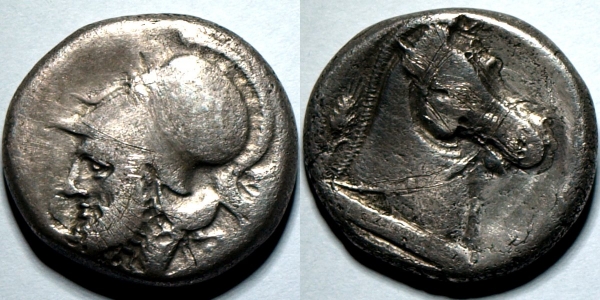
This was struck, probably in Neapolis or Metapontum, in around 280-276 BC. It features Mars on the obverse and a horsehead on the reverse. The legend has worn off on this example, but it reads ROMANO - short for ROMANORVM (of the Romans). It's basically a copy of a typical southern Italy silver coin of the period. This is a slightly earlier (ca 350-330 BC) coin from Metapontum:
The obverse is very similar and even the corn ear on the reverse appears behind the horse. Horseheads are popular on the Carthaginian coins of the period from Sicily - e.g. see Siculo-Punic tetradrachm.
So, by 280 BC Rome had the beginnings of a Greek-style coinage minted in southern Italy along with parallel issues in Rome of large cast coins and bars.
To be continued :)
Monday, March 09, 2015
Friday, March 06, 2015
Another Athenian Tetradrachm
Well, one good tetradrachm deserves another.
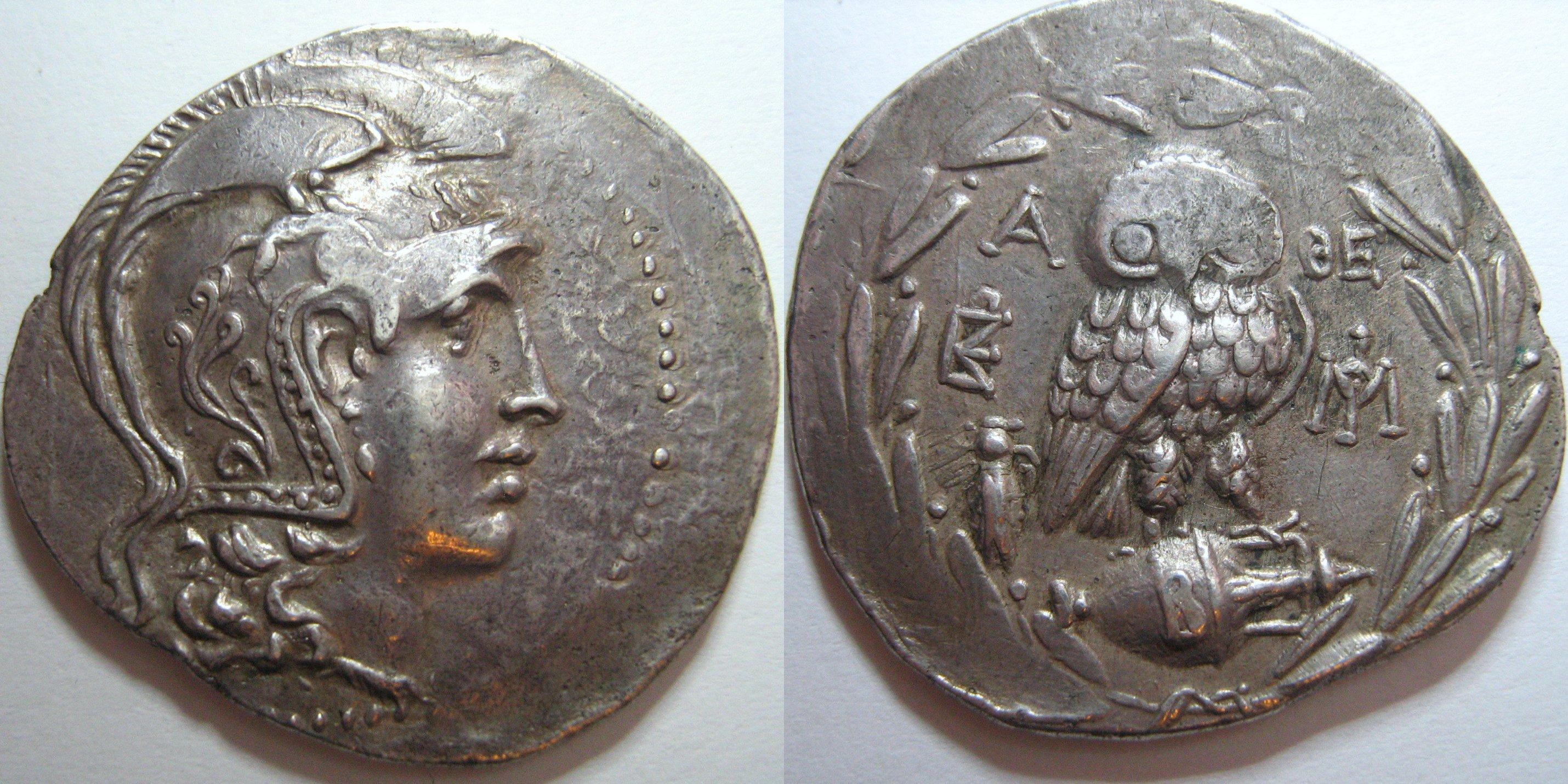
This is a "New Style" Athenian tetradrachm, dating from 153-152 BC. It's got the same basic design as before - Athena on the obverse and an owl on the reverse, but the style of Athena is more realistic and the flan is much larger - this coin is approx. 32mm in diameter. The weight is still around 17g, so the coin is much thinner than the earlier one.
The owl stands on an amphora which bears the letter B - this may refer to the month of issue.
Wednesday, March 04, 2015
Ancient Coins
My last post, 5 years ago, was about my blogging about coins on Google Buzz. That service has since closed down, so I'll start here.
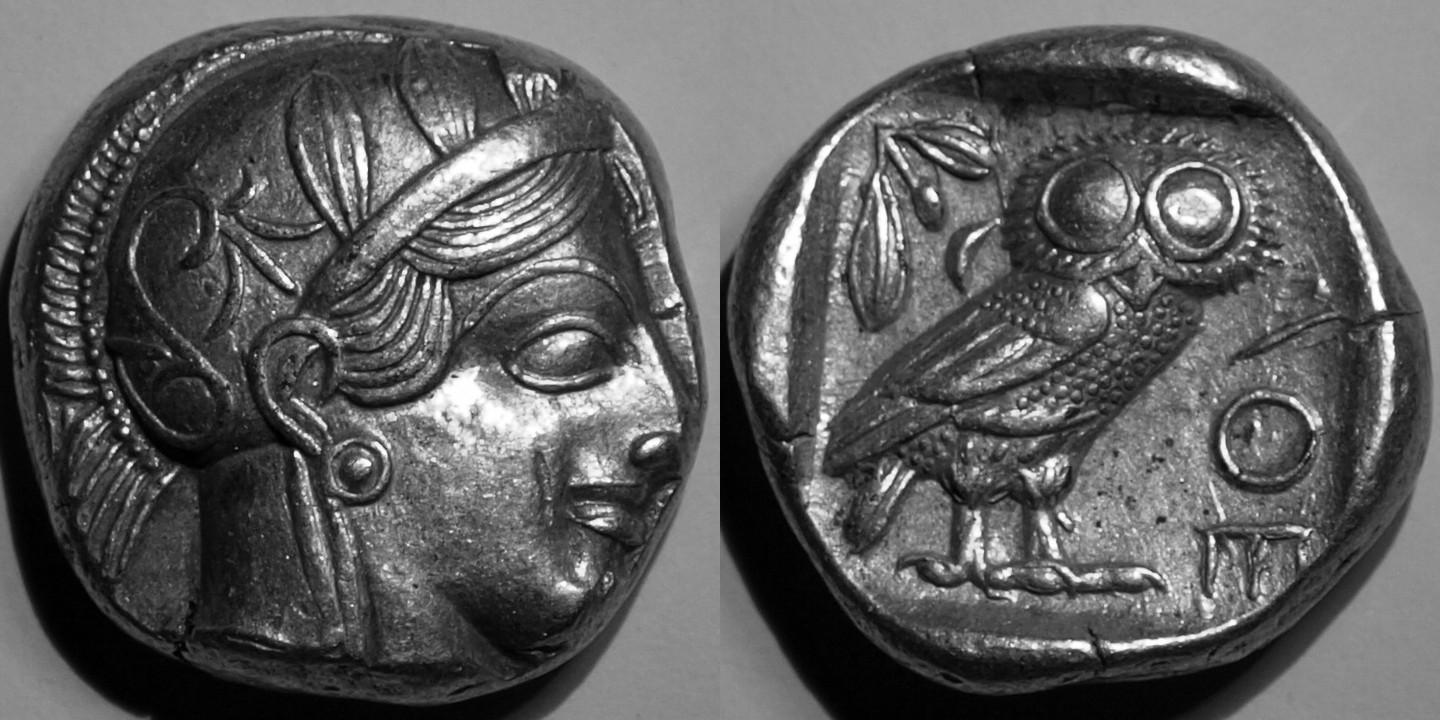
Where better to start with ancient coins than a classical Owl of Athens?
This is a tetradrachm (4 drachmae) of about 17g (this particular coin weighs 17.18g and is 23mm in diameter).
This coin was minted in Athens between 454 and 404 BC. The obverse features Athena, the reverse, the owl, mascot of Athena, an olive sprig and a crescent moon. It's thought that the moon refers to the Battle of Marathon - the great Athenian victory over the Persians in 490 BC. Tetradrachms minted before the battle didn't feature the crescent. The battle began during this phase of the moon - the Athenians requested reinforcements from Sparta but the Spartans delayed for the full moon and arrived after the Athenian victory. The olive sprig probably refers to Athena's gift of the olive tree to Athens.
Tetradrachms like this were minted in large quantities over centuries, with design changes along the way, and circulated far and wide in the ancient world as a trusted means of exchange. They remain common today.
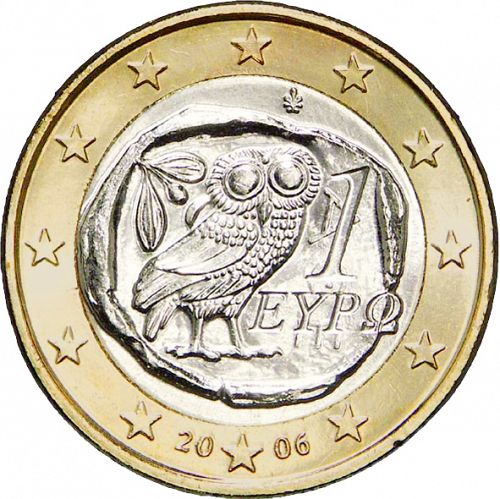
In today's Europe, the international currency is the Euro and it's appropriate that the current 1 Euro coins of Greece use as their reverse the owl.
The introduction of the Euro marked the end of 2500 years of the drachma; at least the design has survived :)
Wednesday, June 16, 2004
First posting
16th June, status of blog: empty until now.
Status of author: hungry, requiring nourishment, going for lunch.
Subscribe to:
Posts (Atom)